


The Hidden Technical Cost of Incorrect Ballasting in Agricultural Machinery
The Hidden Technical Cost of Incorrect Ballasting in Agricultural Machinery
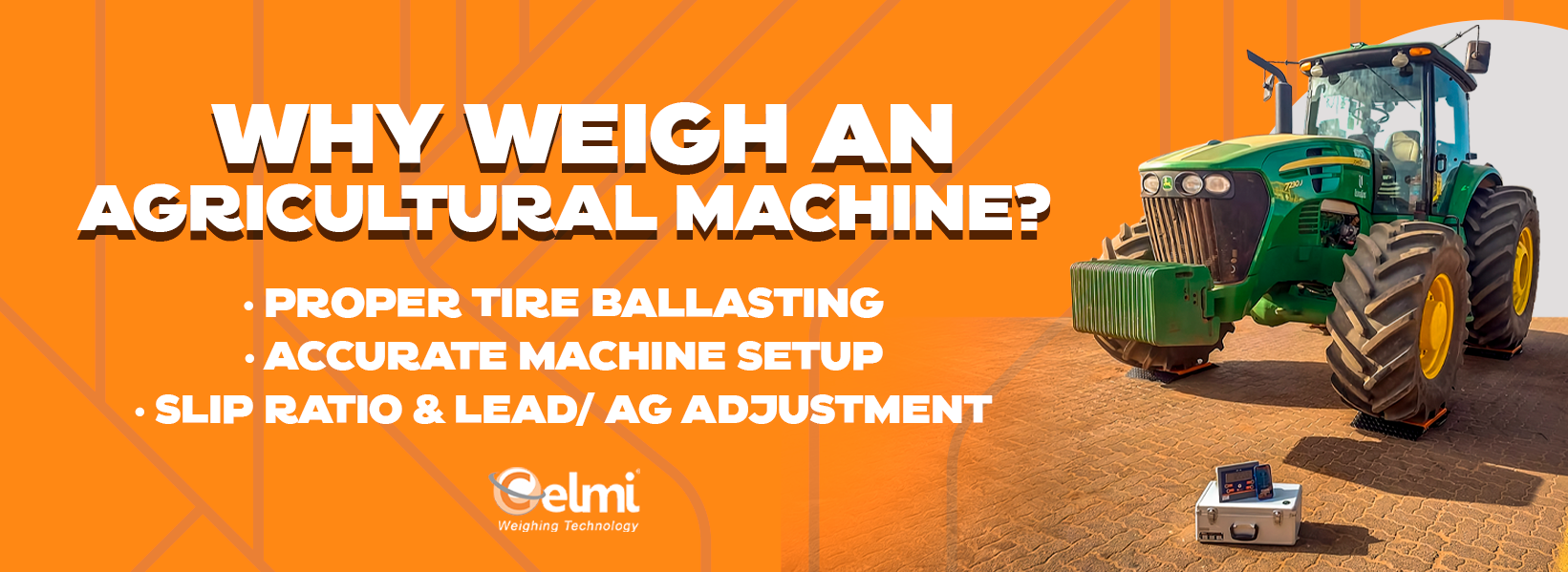
Ballast optimization is one of the most critical — and most underestimated — factors in tractor performance. Incorrect weight distribution doesn’t only affect traction: it silently increases fuel consumption, accelerates tire wear, damages soil structure, and reduces overall productivity.
Over time, these technical inefficiencies translate into significant operational and financial losses.
Based on consolidated industry data:
- Fuel Consumption Increases Significantly
Tractors operating with improper ballast can experience up to 15% higher fuel consumption, according to field tests from the Nebraska Tractor Test Lab (NTTL) and OEM benchmarks.
Excess ballast increases rolling resistance, while insufficient ballast increases slip — both leading to wasted fuel.
- Accelerated Tire Wear
Incorrect front-to-rear weight distribution increases tire slippage and sidewall stress.
Studies from Michelin and Trelleborg show that proper ballast can extend tire life by 20–40%, depending on soil conditions and load application.
- Slip Ratio Deviations Reduce Field Efficiency
The ideal slip range for most tractors is 8–15%.
Below this range, traction is insufficient. Above it, energy is wasted.
Slip levels exceeding 20% can reduce effective field capacity by up to 25%, directly impacting productivity.
- Soil Compaction Increases Sharply
Axle overload contributes to deeper soil compaction layers.
University trials (Iowa State, UFV, INRAE) indicate that excessive compaction can reduce crop yield potential by 5–20%, depending on soil type and crop.
- Implements Operate Below Ideal Parameters
Attachments such as planters, loaders, sprayers, and subsoilers require precise weight ranges.
Incorrect ballast leads to instability, uneven working depth, reduced traction, mechanical stress, and premature maintenance — often resulting in warranty claims.
How the CM-1002 Ensures Precise Ballasting With High Accuracy
The CELMI CM-1002 wireless weighing system allows for precise and traceable measurement of:
- Total tractor mass
- Front and rear axle load distribution
- Load impact from implements
- Ballast weight adjustments
- Slip-optimizing weight configuration
- Compliance with OEM ballast and tire-pressure charts
- Weight shifts caused by terrain and differential loading
With these measurements, dealerships move from subjective calibration to precision-based setup, improving customer results and lowering service burden.
The CM-1002 Helps Dealerships To:
✔ Reduce fuel consumption
✔ Extend tire life
✔ Optimize traction and productivity
✔ Protect soil structure
✔ Validate OEM configuration specifications
✔ Deliver traceable ballast reports
✔ Minimize after-sales complaints related to machine performance
 United States
 Brasil